
 Podcasts
 Building ecosystems of care: Community health, trust, and equity
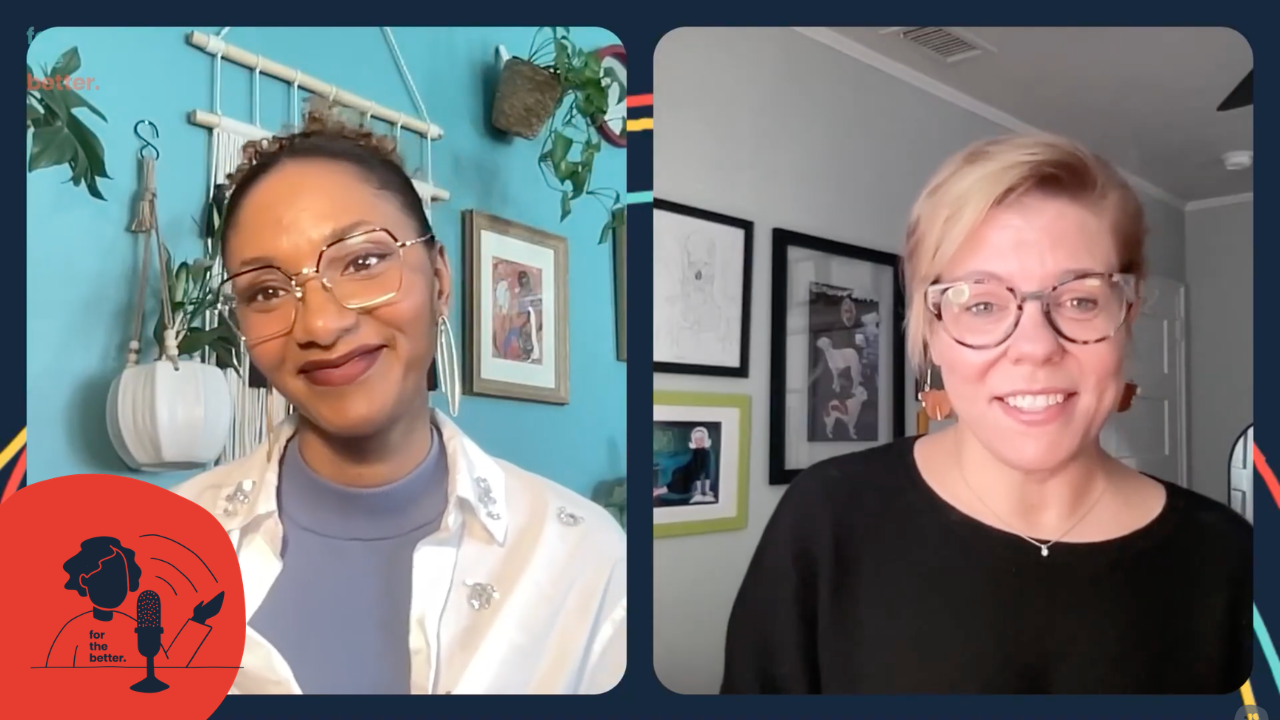
In too many communities, getting help means repeating the story of your hardest day — over and over — to different people, different agencies, different systems. Austen Williams thinks it doesn’t have to be that way.
As Executive Director of The MEDI, Inc., a nonprofit based in North Charleston, South Carolina, Austen is building something different: a model of community health engagement rooted in dignity, trust, and what she calls impact multiplication. In this episode of For the Better, she joins host Lauren Minors to talk about the work — what it looks like, why it works, and why the communities themselves are always the ones who know best.
The MEDI’s platform lets anyone type in their zip code and instantly see what resources are available to them — food, housing, transportation, healthcare, education, and more. The tool covers communities from South Carolina to New Jersey, with real traction in North Carolina, Maryland, Virginia, and Washington, D.C. But Austen is the first to say the technology is only part of the story.
“Technology without people is pointless. If this technology exists but people don’t know it exists, well, then that’s pointless.”
What makes The MEDI’s approach distinctive is how they show up in communities before asking anything of them. Rather than arriving with a solution and a slide deck, the team invests in understanding who’s already doing the work — and how to support those efforts rather than duplicate or displace them.
“Community members know what the core concerns of their own community are. One of the biggest mistakes organizations can make is going in like, ‘Let me fix your problem.’ Because almost always, there’s already someone there doing the work.”
That philosophy extends to The MEDI’s Workforce Forward Project, a partnership with employers and small business owners focused on the ALICE population — people who are Asset Limited, Income Constrained, and Employed. These are full-time workers who still can’t cover their basic needs, and they often don’t look the way we’d expect. In a place like Charleston’s Lowcountry, where hospitality and tourism power the local economy, a workforce that can’t access essential resources is a problem that belongs to everyone.
Austen grounds it all in a metaphor that sticks: redwood trees, during drought, share water from their own reserves with the trees surrounding them — because they understand that their survival depends on the health of the forest. That’s the ecosystem The MEDI is trying to build. Not a network. Not a program. A living, interdependent system where all ships rise.
Key Takeaways
- How The MEDI’s zip-code-based platform connects people to health and social resources — and why community engagement is the real engine behind it
- The power of being “curious instead of corrective” when entering a new community
- What the ALICE population is and why healthcare marketers and employers can’t afford to ignore them
- How the Workforce Forward Project is driving real change in the Charleston Lowcountry, New Jersey, and North Carolina
- What “impact multiplication” looks like when you invest in the people already doing the work